
 EN
EN
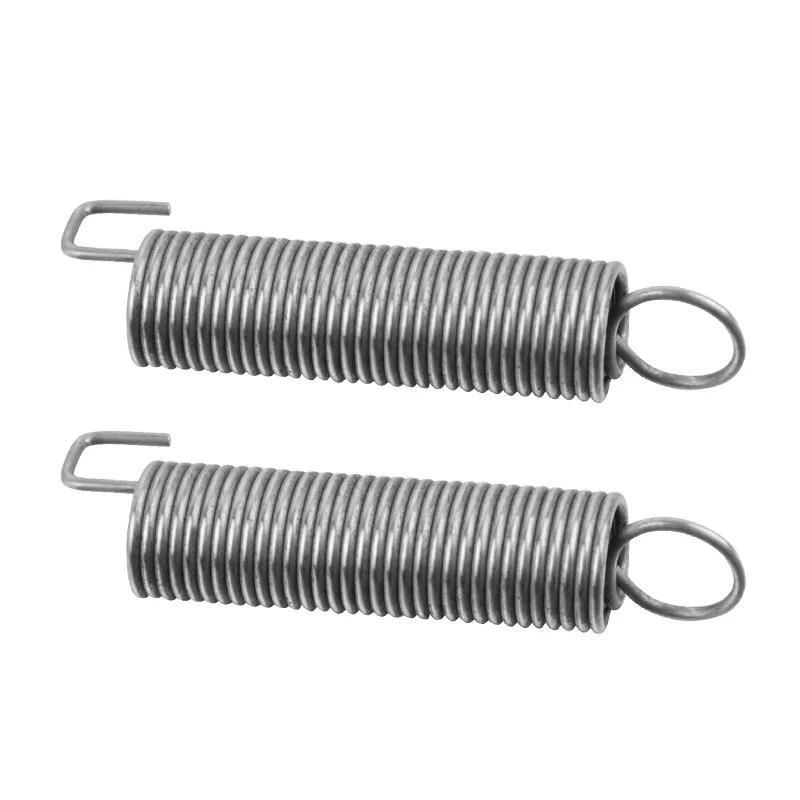
Tension springs are small yet vital parts of machines and tools. They act, after being stretched, by pulling back and then springing forward. When purchasing numerous tension springs for business, you want to make sure that every spring has a snug fit. If the springs are too soft or too firm, they may not function effectively. That is the reason that it is so much easier to understand the tolerances, which are the acceptable differences of size and strength. All the time at Lisheng, we check our tension springs to be fully compliant with these four parameters, so our customers can always be sure to get the highest quality tension springs that we can possibly provide. How do they most often set out the tolerances, and what complications could occur when producing huge quantities of springs simultaneously?
What Are the General Tolerances of Commercially Produced Wholesale Extension Springs
When companies purchase tension springs in bulk, they expect the springs to be very near in size and strength to what they ordered. The tolerance is the amount that each spring can be taller or shorter, or softer or firmer, than exactly the size and force that you need. If, for instance, there’s a requirement that the spring should have a length of 50 millimeters, then tolerance would permit it to be anywhere from 49.5 to 50.5 millimeters. That tiny difference ensures that the springs will fit and operate properly in machines. Like Lisheng, we follow tolerance bands like the above, but depending on their use, sometimes customers want tighter or looser limits. For wholesale quantities, the standard length tolerance is plus or minus one percent of the spring’s dimension. Wire diameter which impacts how strong a spring is has an accuracy of plus or minus 0.005 millimeters. A key measure is also the spring’s force, or how much it pulls back when stretched. Force tolerance can be around 5 to 10 percent, since slight variations in size or material can alter the strength. If the springs are produced in extremely large numbers, keeping them all within these limits requires great skill and good control over the machines. To prevent the springs from going beyond those ranges, Lisheng employs careful checks and precise tools. Occasionally customers will request special tolerances, such as very tight control for a high-tech machine or looser control for simple tools. We’re going to do everything we can to work with every buyer to satisfy these requirements.” When the tolerances are too vast, the springs can break or wear down faster. Too tight, and the springs are more expensive to produce. Lisheng gets the balance right, so the springs are functional and affordable. They take the second approach, keeping customers happy and hardware humming.
What Are Common Tolerance Problems Of Wholesale Commercial Tension Spring Manufacturing?
Large numbers of tension springs are hard to make at once. And even on good machines, some springs are a bit off in size or strength. One common issue is that the wire diameter varies slightly during production. If your dirt bike wire is too thick or thin, the spring will not return it with adequate force. The machines that coil the wire into springs occasionally can slip or stretch the wire unevenly. This results in the coils being spaced improperly or a spring shorter or longer than desired. We monitor those details closely at Lisheng. We have sensors and measurement tools in the production process to catch these problems early. Another problem is related to heat treatment. Springs are tensed and tempered to be strong and bendy at the same time. If that’s wrong, some springs wind up being too firm or too soft, affecting the amount of pull force they exert and how long they last. This can lead to springs breaking more quickly or losing their tension. Production speed also matters. With insufficient time for perfect control when processing orders rapidly, less springs are accepted with differences within the permissible limit. To prevent it, Lisheng strikes a balance between time and quality. Material quality is another factor. If the metal wire contains small defects or impurities, however, the spring will not always work as intended. We test every batch of wire in our lineup closely before it’s deployed. As well as, small errors in measuring instruments or human mistakes can lead to parts which do not fit to tolerance after a while. Training workers and relying on automated systems can mitigate such errors. Because tension springs are employed in critical machine parts, slight variance from the tolerance value can result in serious issues. That’s why Lisheng pursues perfection from raw material procurement, production to final inspection. Such attention to detail prevents costly downtime, expensive repairs and dissatisfied customers for our clients. The work is difficult but rewarding in that well-made springs keep machines safe and functioning well.
What are the Effects that Tolerance Can Have on the Performance of a Commmercially Manufactured Tension Spring
Tolerance means how far the product can deviate from its ideal size or shape, and still function appropriately. For industrial tension springs, tolerance refers to the minute variations permitted in areas such as the length of the spring, diameter and space between coils. These are small differences that make a big difference in how well the spring works.
When a tension spring is manufactured, it is supposed to be stretched and pull back in a specific manner. If its size isn’t within the proper tolerance, the spring may fit too loosely or too tightly. If the wire is not as thick as it should be, for instance, then the spring could grow weaker and break sooner. If the springs are not spaced correctly, the spring either won’t stretch how it’s supposed to or it could end up sticking. Spring strength can even be influenced by a change of only a slight amount in length.
These changes are influential in down tuning the power of a spring used in machines or apparatus. In machines, a spring that is too weak or too strong can make parts move the wrong way or even break. This can cause the equipment to seize up or become unsafe. So maintaining the tight tolerance is what ensures that the spring will perform in exactly the same manner every time it’s used. This consistency is extremely important in commercial products where springs are designed to be used over and over again.
At Lisheng, we understand the critical of these tolerances. We scrutinize each spring to ensure it adheres to precise standards.” This is the secret our springs always work and last a long time. With good control of tolerance limits, customers can rely on Lisheng's quality and springs to keep their machines performing well and operating safely.
Where to Find Top-Notch Wholesale Sources with Tight Tolerance Requirements for Precision Springs
Choosing the right wholesale suppliers for tension springs is very crucial if you are aiming quality springs. Good suppliers ensure that the springs are produced to very stringent tolerance controls. This indicates that the springs are produced with very little deviation from the ideal size and shape. When ordering in volume, it's especially critical that you tightly manage these differences one bad spring will wreak havoc.
The finest wholesale suppliers use special machines and tools to inspect the size and shape of every spring. They measure wire diameter, coil spacing and length with meticulous precision. If a spring does not meet the regulations, it is not put on the market. This tight control keeps quality high and ensures that all springs behave the same way.
Lisheng has developed into a highly qualified manufacturer in China, based on 15 years of experience in production and exploration. We now run the latest machinery and have workers who are trained to inspect every spring we make. We are really scrupulous with all that quality control. So our customers are getting springs that are accurate & consistent. And whether a customer needs thousands of springs or just a few, we ensure each one lives up to those high standards.
Getting a supplier just like Lisheng guarantees you that you receive simply top quality and high safety spiral tension spring. Quality control of tolerances prevents problems in machinery and tools, which saves time and money on repairs. With Lisheng as your partner, you have the assurance that you are always receiving the highest quality springs produced to tight tolerance limits.
What Are The Main Determinants Of Tolerance For Commercial Tension Springs
Key contributors influence the dimensional tolerances that are applied for commercial tension springs. These parameters determine how tight or loose the tolerance should be to ensure the spring functions properly. There knowledge helps companies like Lisheng make springs that are just right for each use.
The material of the spring is very first one to pay attention to. Metals deform and stretch in different ways. Some materials require tighter tolerances as even a small variation can have a big impact in strength and flexibility. Lisheng selects the best material and warehouse and service the gages carefully to guarantee that all of them are in the perfect quality. Lisheng also chooses the best material and thermal treatment for all components which offer the result of great rigidity, high precision, unbreakable body providing a long service life. Lisheng chooses the best material, it makes our product hold use tolerance, as marked on product style regulatory.
Second, the spring size and configuration influences tolerances. Smaller springs, or springs with shapes that deviate from the most symmetrical shape possible (typically a circle), require tighter tolerances because even a slight change in size can introduce profound variations. Bigger springs can sometimes tolerate a bit more inconsistency without losing performance. For the springs, Lisheng works to specific designs and measurements provided by customers and ensure tolerance according to function purpose.
Third, the purpose of the spring is an important consideration. Spring that go in vital machines or safety products require super tight tolerances. If the spring is for less critical applications, you can go a little looser on the tolerance. Lisheng will collaborate closely with the customer to determine how a spring is used, and establish tolerance limits based on that analysis.
Lastly, tolerance is affected by the manufacturing process itself. Advanced machinery and experienced labor help keep the tolerance tight. Lisheng employs spring grinding machines, through feed grinding machines and double end grinders to ensure all the production processes are carried out as per the tolerance requirement; therefore maintaining a high level of accuracy.
By focusing on these details material, size, use and manufacturing Lisheng makes certain that there are no variance-like the springs wouldn't spring back as expected- such that every new order is met with the same quality as before. That would make customers fail to get good performing springs, long-life spring and safe running machine.”
Table of Contents
- What Are the General Tolerances of Commercially Produced Wholesale Extension Springs
- What Are Common Tolerance Problems Of Wholesale Commercial Tension Spring Manufacturing?
- What are the Effects that Tolerance Can Have on the Performance of a Commmercially Manufactured Tension Spring
- Where to Find Top-Notch Wholesale Sources with Tight Tolerance Requirements for Precision Springs
- What Are The Main Determinants Of Tolerance For Commercial Tension Springs