
 EN
EN
Blog Article (For foreign‑trade independent website|SEO‑optimized)
Blog Title: Silver‑Plated Fine Micro‑Springs for Sensor Systems: Key Design & Manufacturing Challenges Meta Title:Custom Silver‑Plated Fine Micro Spring for Sensor | Precision Electronic Spring Manufacturer Meta Description:Discover critical requirements for silver‑plated fine micro‑springs used within sensor modules. We offer OEM custom micro‑springs with ultra‑tight tolerance, stable low contact resistance for electronic sensing applications. Suggested URL:blog/silver‑plated‑fine‑micro‑spring‑sensor‑systems.html Publish Date:2026‑10‑10
Silver‑Plated Fine Micro‑Springs for Sensor Systems: Key Design & Manufacturing Challenges
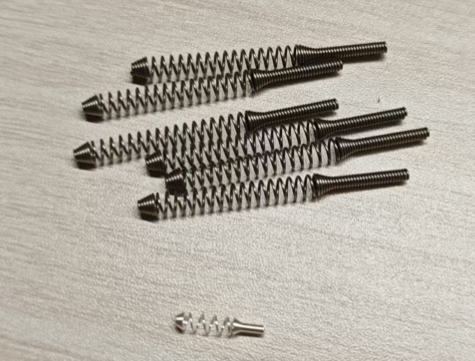
Modern miniature sensors for industrial, automotive, medical and smart‑device applications demand more than just mechanical spring force. Tiny internal micro‑springs must deliver consistent elasticity while maintaining stable electrical signal transmission. Silver‑plated fine micro‑springs become a preferred solution for many high‑precision sensor projects where low contact resistance and reliable signal performance are non‑negotiable.
Why Silver‑Plated Fine Springs Are Critical for Sensor Modules
Sensors often work with microamp‑level weak signals. Even minor resistance fluctuation may trigger signal drift, measurement deviation or intermittent reading failures. Silver owns the highest electrical conductivity among common engineering metals, making silver plating ideal for electronic contact components.
When integrated inside sensor assemblies, these fine springs perform dual roles:
- Mechanical function: Provide stable, repeatable contact pressure to hold sensing elements, maintain consistent pre‑load over thousands‑to‑millions of operating cycles.
- Electrical function: Act as conductive signal paths, keeping contact resistance low and steady under vibration, temperature shift and long‑term service.
Compared with ordinary zinc or nickel‑plated springs, properly silver‑plated micro‑springs minimize oxidation risks on contact surfaces, reduce signal attenuation and deliver more reproducible electrical performance for precision sensing circuits.
Core Manufacturing Difficulties of Sensor‑Grade Fine Silver‑Plated Micro‑Springs
Producing qualified silver‑plated micro‑springs for sensors brings unique technical hurdles that standard spring production cannot easily solve.
1. Ultra‑fine wire dimension & tight mechanical tolerance Most sensor micro‑springs adopt very fine wire diameter, sometimes below 0.3 mm. Coiling consistency is extremely hard to control. Tiny deviation on wire diameter, coil diameter or free‑length will directly change spring rate and contact pressure, disturbing sensor measuring accuracy. Our workshop controls critical dimensional tolerances down to ±0.02 mm for selected sensor spring variants.
2. Silver‑plating uniformity & hydrogen embrittlement prevention For ultra‑fine springs, uneven silver plating will alter effective spring dimension and cause unstable contact resistance. More importantly, electroplating process may introduce hydrogen embrittlement on thin spring wire. Post‑plating baking / de‑hydrogen treatment is mandatory to avoid delayed spring fracture during sensor working life. We strictly manage plating thickness, base‑layer pretreatment and full de‑hydrogen procedure for every silver‑plated micro‑spring batch.
3. Balancing spring elasticity and conductive performance Base material selection is vital. Beryllium copper, phosphor bronze and high‑performance stainless steel are typical substrate options. Each material balances mechanical fatigue resistance and inherent conductivity differently. Our engineering team helps customers select proper substrate according to working temperature, cycle life target and signal‑level requirements.
4. Surface cleanliness and zero‑defect requirement Even minor burrs, plating nodules or residual chemical contamination may scratch sensitive sensor PCBs or create unstable contact spots. Every silver‑plated micro‑spring for sensor use goes through enhanced visual inspection and surface quality screening.
Typical Application Scenarios
Our custom silver‑plated fine micro‑springs are widely adopted across multiple sensing‑related sectors: ‑ Industrial pressure & displacement sensor internal contact components ‑ Automotive position sensors ‑ Wearable medical biosensor modules ‑ Smart home detecting sensors ‑ Test & measurement instrument sensing assemblies
Our Custom Capabilities as a Precision Spring Manufacturer
As an experienced manufacturer specialized in custom precision springs for electronics, we deliver one‑stop service for sensor‑grade silver‑plated micro‑springs: ‑ Accept customer PDF drawings or physical sample for prototype evaluation and mass‑volume production ‑ Support fine wire micro‑spring coiling, custom spring‑rate tuning ‑ Controlled silver plating thickness with complete de‑hydrogen treatment process ‑ Supply inspection documentation including dimension reports, spring‑load test records and plating‑thickness certificates ‑ Small‑batch prototype orders up to high‑volume mass production
Our in‑house testing equipment covers spring‑force testing, micro‑dimension measurement, salt‑spray ageing and fatigue cycle verification, helping validate spring performance before sensor integration.
If you are sourcing custom fine micro‑springs with silver plating for your sensor projects, feel free to send over your specifications to our engineering team for technical review and quotation.